
As energy codes become more important and performance standards continue to rise, blower door testing has become a critical step in modern construction. Whether you’re completing a new commercial project, renovating an existing facility, or pursuing energy certification, working with an experienced testing firm ensures your building meets required performance thresholds. If you’re scheduling blower door testing in Seattle, understanding the process ahead of time helps your project stay on track and avoid costly delays.
Why Blower Door Testing Matters
Blower door testing measures how much uncontrolled air leakage exists within a building enclosure. Excess air leakage can lead to:
- Higher energy costs
- Comfort issues
- Moisture intrusion
- Poor indoor air quality
- Failed energy code inspections
In Seattle’s wet climate, controlling air movement is especially important to prevent moisture-related issues within wall assemblies. Proper building enclosure testing in Seattle helps verify that your structure is performing as designed before occupancy.
Types of Blower Door Testing
The two most common standards used for commercial air leakage testing are:
ASTM E779 Testing in Seattle
ASTM E779 testing in Seattle is the industry standard for multi-point whole-building air leakage testing. This method involves pressurizing and depressurizing the building at multiple pressure levels, typically between 25 and 75 Pascals. Data is collected across several readings to develop an accurate leakage curve and calculate total air leakage rates.
ASTM E779 is commonly required for:
- Large commercial buildings
- Public institutions
- LEED-certified projects
- Federal or municipal facilities
This method provides detailed, defensible data for compliance documentation.
ASTM E1827 in Seattle
ASTM E1827 in Seattle is a single-point test method, typically conducted at 50 Pascals. It is faster and often used when multi-point testing is not required. While less comprehensive than E779, ASTM E1827 can still provide valuable information for energy code compliance and quality control.
Your testing company will determine which standard is required based on project specifications and governing codes.
What to Expect During Testing
When scheduling blower door testing in Seattle, preparation is key. Here’s what typically happens:
1. Pre-Test Coordination
Your testing firm will review project drawings, enclosure details, and testing requirements. All exterior penetrations, windows, doors, and air barriers should be fully installed and sealed prior to testing.
2. Equipment Setup
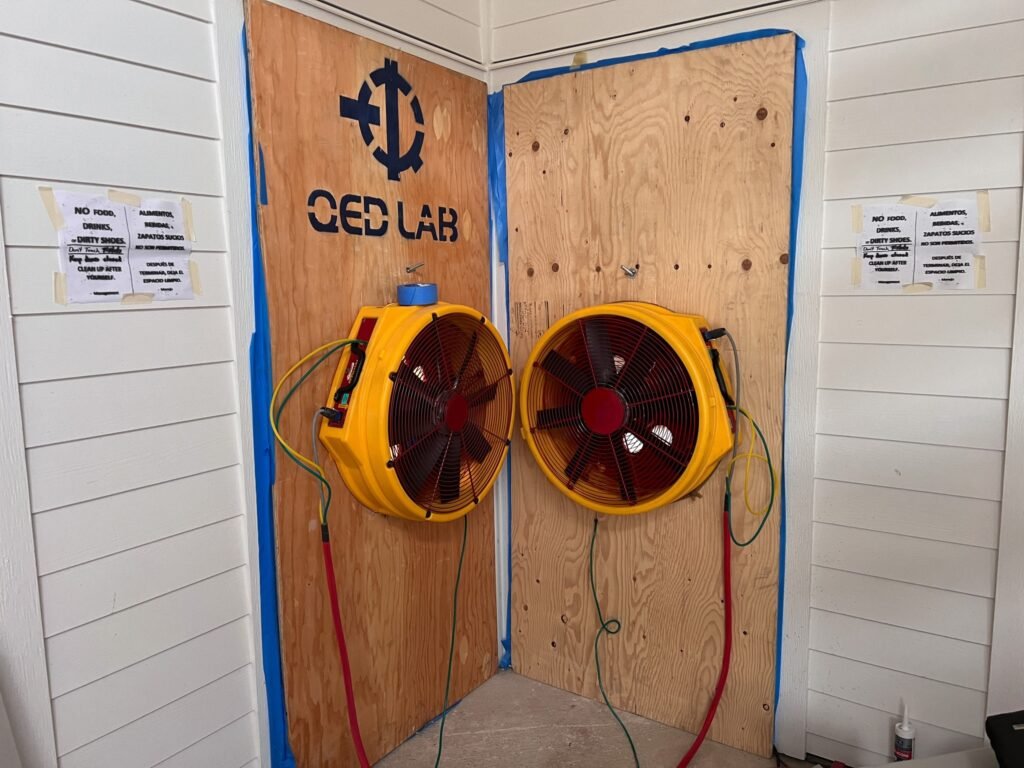
Large calibrated fans are installed in exterior door openings. Digital manometers measure pressure differences, while data logging systems capture airflow readings. On larger commercial projects, multiple fans may be required.
3. Pressurization & Depressurization
The building is placed under controlled pressure differences. The testing team measures how much air moves through the fans to maintain those pressures. This allows them to calculate leakage rates in cubic feet per minute (CFM) per square foot of enclosure.
4. Leakage Investigation
During building enclosure testing in Seattle, technicians may also use infrared cameras, smoke pencils, or fog machines to identify major leakage areas. This diagnostic step is especially helpful if the building fails to meet target performance.
5. Reporting
A formal report is generated documenting testing procedures, pressure readings, airflow calculations, and final results. This documentation is typically submitted to architects, engineers, or jurisdictional authorities.
Why Experience Matters
Seattle’s building stock ranges from high-rise curtain wall systems to complex healthcare and institutional facilities. An experienced firm performing ASTM E779 testing in Seattle understands how to manage large-volume buildings, coordinate with contractors, and meet strict compliance deadlines.
Proper testing not only verifies compliance but also protects your investment by identifying performance gaps before occupancy.
Avoiding Common Testing Failures
Many buildings fail initial air leakage testing due to:
- Incomplete air barrier transitions
- Poorly sealed mechanical penetrations
- Curtain wall joint issues
- Unsealed electrical boxes
- Elevator shaft leakage
Early coordination with a qualified testing team can prevent last-minute surprises.
Final Thoughts
As energy efficiency standards continue to evolve, blower door testing plays an increasingly important role in construction quality assurance. Whether your project requires ASTM E1827 in Seattle or comprehensive ASTM E779 testing in Seattle, working with a trusted firm ensures accurate results and smooth compliance.
If you’re planning blower door testing in Seattle, partnering with a company experienced in building enclosure testing in Seattle will give you confidence that your building performs to specification — and stands up to Seattle’s demanding climate conditions.